
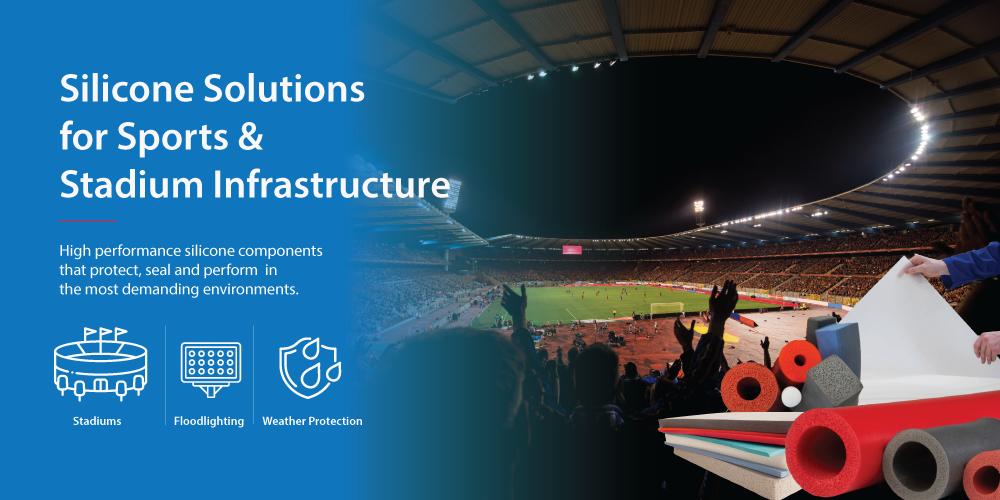
Sports stadiums rely on high-performance materials to keep their infrastructure working safely and reliably, whatever the conditions. From protecting high-traffic equipment to sealing exposed fixtures against the elements, silicone plays an important role in improving durability, reducing maintenance and supporting long-term performance.
Why do stadiums need high-performance materials?
Sports venues present a unique combination of challenges: the infrastructure needs to stay safe, functional and visually appealing, despite constant contact from thousands of visitors. It’s not just about what the public sees either – hidden systems such as seals, gaskets and roof components need to be able to perform consistently and reliably in harsh outdoor environments.
Unlike many commercial buildings, stadiums experience cyclical loading, regular cleaning, seasonal weather extremes and high levels of mechanical wear. There’s also the maintenance side of things to think about, which can also be difficult and expensive, especially when certain equipment is at height or otherwise difficult to access.
Stadium management teams can reduce these challenges by installing high-performance materials that resist degradation, maintain consistent mechanical properties and reduce the need for frequent replacement. Silicone offers a fantastic combination of weather resistance, flexibility and durability that makes it well suited to a huge range of applications throughout sports venues.
Where silicone adds value in sports venues
Turnstile arm protection and impact absorption
One practical example is the use of silicone sponge protective sleeves on stadium turnstile arms. Installed over stainless-steel cross arms, silicone sponge sleeves provide a cushioning layer that helps absorb impact while protecting both users and the underlying metalwork. This reduces the risk of injury, limits cosmetic damage and helps extend the service life of the equipment.
Because turnstiles are installed outdoors and see heavy usage, the protective material also has to resist UV exposure, rain, temperature changes and repeated compression without deteriorating. Silicone sponge is particularly well suited to these conditions, as it maintains its resilience over long periods of time, despite the consistent demands of crowds.
The use of a high-visibility yellow finish also demonstrates how silicone can combine functional performance with improved visual awareness, supporting both safety and appearance in busy public environments.
Floodlight sealing and weather resistance
Floodlighting systems are another important part of stadium infrastructure where reliable sealing is essential.
Precision-cut silicone gaskets help protect lighting assemblies against water ingress, dust and environmental contamination. Silicone’s excellent resistance to UV exposure, moisture and temperature fluctuations makes it particularly effective for permanently exposed outdoor installations.
Silicone’s low compression set means seals continue to apply consistent pressure over extended periods, meaning that this protection against external contamination continues long after installation. Practically, this means you can rely on the lighting fixtures to stay working as they should, and you can go longer between maintenance checkups.
Pitch testing and abrasion performance
Silicone’s role in sport extends far beyond permanent infrastructure. In football pitch surface testing, specialist silicone components are used to evaluate friction and abrasion characteristics – an important part of performance and safety tests.
Roof membrane sealing at Wimbledon
Silicone is equally suited to large-scale structural sealing applications. As demonstrated in Silicone Engineering’s recent case study, solid silicone membranes were used to waterproof structural roof joints as part of a stadium roof refurbishment in Wimbledon. The project highlights the material’s ability to provide long-term weather resistance and reliable sealing in demanding external envelope applications.
Roof structures experience constant exposure to sunlight, rain, wind and significant temperature fluctuations throughout the year. As a result, sealing systems must continue to perform despite continual environmental stress, making silicone an ideal material for these challenging outdoor conditions.
Material benefits that matter most
While every stadium application has different requirements, its core material properties consistently make silicone an attractive choice.
UV resistance and weathering performance
Silicone offers outstanding resistance to UV radiation and weathering, helping components retain their mechanical properties, flexibility and appearance over many years. This makes it particularly suitable for exposed installations such as seals, protective covers, external gaskets and roofing systems.
Temperature resistance
Silicone maintains stable performance across an exceptionally wide operating temperature range (-60°C to 230°C). Unlike many elastomers, it stays flexible at low temperatures and resists degradation during periods of elevated heat.
Low compression set for long-term sealing
Silicone has a low compression set, meaning that gaskets and seals recover their original shape after prolonged compression. This helps preserve the sealing performance throughout its service life and reduces the likelihood of water ingress, contamination or premature seal failure.
Cushioning, impact protection, and abrasion resistance
Silicone sponge materials provide excellent cushioning characteristics that help absorb impact and protect equipment, while solid silicone grades offer durable wear resistance for demanding engineering applications.
Together, these properties help reduce damage, improve user safety and extend the lifespan of frequently used infrastructure such as turnstiles, barriers and protective components.
Why silicone is a strong fit for stadium infrastructure
From public-facing equipment to concealed infrastructure, specifying durable materials contributes to reduced maintenance, improved reliability and lower whole-life costs.
Silicone offers a unique combination of flexibility, environmental resistance and mechanical performance that allows it to solve a massive variety of engineering challenges. Whether protecting moving parts, sealing external equipment, supporting structural applications or enabling specialist testing, silicone continues delivering reliable performance throughout long service lives.
How Silicone Engineering supports complex applications
Here at Silicone Engineering, we have extensive experience developing bespoke silicone solutions for demanding industrial and infrastructure projects. We manufacture precision-designed silicone sponge and solid silicone products tailored to unique application requirements. This includes custom gaskets, protective profiles, sleeves, seals and fabricated components produced to exact specifications.
By combining material expertise with precision manufacturing capabilities, we can help you specify the most appropriate silicone grade for performance, durability and long-term reliability across sports venues and wider infrastructure projects.
Need help specifying a silicone solution?
Whether you’re designing a new stadium, upgrading an existing venue or maintaining vital infrastructure, choosing the right silicone material can improve performance, extend service life and reduce maintenance requirements.
If you’re specifying components for sports venues, stadium infrastructure, or other demanding outdoor environments, speak to the technical team at Silicone Engineering. We can help you identify the most suitable silicone sponge or solid silicone solution for your application, ensuring long-term performance where durability, sealing reliability and environmental resistance matter most.