Silicone Sponge: Applications & Benefits

Silicone Sponge: Applications & Benefits

Silicone sponge is a versatile and durable material that can be used in a wide range of applications.

Designed for exceptionally reliable sealing, cushioning and vibration insulation, silicone sponge offers impressive heat resistance and can withstand extremely high and low temperatures without degrading.

 

What are the properties of silicone sponge?

Silicone sponge is a versatile material with a huge range of beneficial properties that make it suitable for a wide range of applications. Understanding the properties of silicone sponge and silicone sheets can help you identify whether it is the best choice of material for your required application.

Here are some of the key properties of silicone sponge:

✔ Closed cell structure

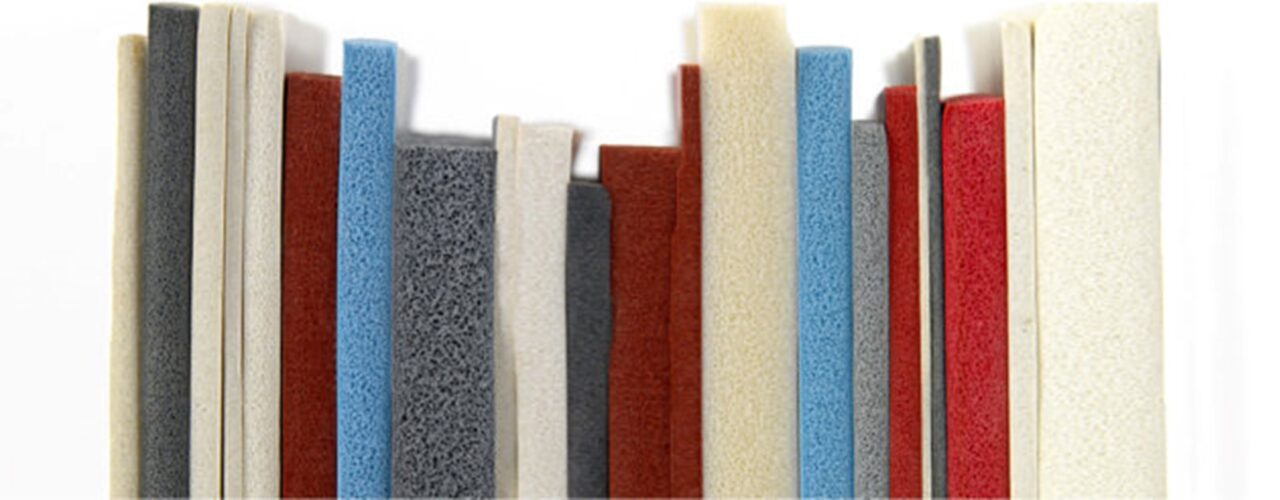
Silicone sponge is an elastomeric material and is expanded at the time it is heat cured. This process results in a closed cell sponge structure, meaning each cell is a complete closed sphere, trapping air within each cell and creating a natural barrier against moisture, liquids, gases and other environmental elements.

✔ Temperature resistance

Silicone sponge can withstand extremely high and low temperatures, operating within a temperature range between -60 degrees Celsius and 230 degrees Celsius without compromising its structural integrity or high performance.

✔ Environmental resistance

Thanks to its closed cell structure, silicone sponge is highly resistant to moisture, radiation and ozone and UV, allowing it to perform well in even the harshest of environments. This makes it ideal for use in outdoor applications, including sealing for HVAC systems, Aerospace and Marine.

✔ Water resistance

The closed cell structure also means that silicone sponge is also highly water resistant. Capable of meeting ingress protection 67 (IP67), kSil Silicone Sponge Sheeting offers water ingress protection to many critical applications in many market sectors.

✔ Compressibility

Silicone sponge offers impressive low compression set, meaning the material will recover quickly when compressed. This is a critical aspect for design engineers when testing sealing materials. The sponge can seamlessly fill gaps and conform to irregular shapes and surfaces due to its excellent flexibility, without jeopardising its structural integrity.

✔ Chemical reactivity

Silicone is an extremely inert material. It does not react to many chemicals and oils however; it does not react well petroleum-based fuels.
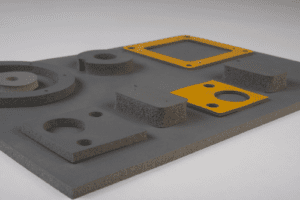
 

Elastomers sheeting

What applications can silicone sponge be used for?

With its range of highly favourable properties, silicone sponge can be used in a wide variety of applications, including:

Gaskets and seals

Silicone sponge is commonly used in the Automotive sector to seal, insulate and protect. Silicone sheets are also used within the world of Aerospace to produce die-cut gaskets used to seal the different compartments found in the interior cabin such as overhead storage bins, electronic components and HVAC seals.

Thermal insulation

Silicone sponge’s heat-resistant properties make it a great material for insulating industrial equipment, including valves and pipes, as well as gap filling and thermal insulation.

Shock absorption and cushioning

Silicone sponge can be used to prevent vibration, rattle and squeak in Automotive, Aerospace, Rail and other Mass Transit transportation.

Food processing equipment

Silicone sponge is widely used in food processing equipment due to its non-toxic and heat-resistant properties. Typically used as seals and gaskets, silicone sponge can withstand high heat applications

Construction industry

In the construction industry, silicone sponge is used for sealing, insulation and protection. Creating seals and gaskets for HVAC systems, glazing and doors seals and improving the energy efficiency of buildings.
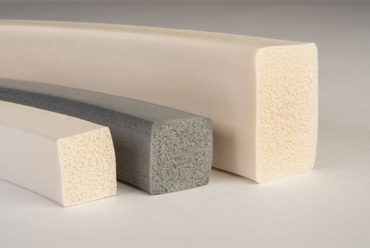
Silicone Sponge extrusion

What are the benefits of silicone sponge?

Silicone sponge is a versatile material with a whole host of benefits, including:

  • Wide operating temperature (-60°C to 230°C)
  • Extremely low water absorption
  • Environmental resistance
  • Low Compression Set
  • Durability
  • Offered in a variety of densities, ranging from 150 kg/m3 to 530 kg/m3
  • Manufactured in a range of thicknesses, from 1.5mm to 12.7mm in rolls and up to 45mm in sheets
  • Available in sheets, rolls & extruded shapes

How can we help?

Silicone Engineering is the leading silicone sponge sheeting manufacturer in the UK – we are experts in calendared closed cell silicone sponge.

Manufactured on state-of-the-art processing lines, our kSil® Silicone Sponge range is known across industries for providing excellent thermal insulation, physical performance and temperature resistance in many applications.

Our new fully FDA-approved silicone sponge sheeting is the ideal material for applications in the food, beverage and pharmaceutical industry. Ideal for seals, gaskets and more.

To find out more about the silicone sponge sheeting products we offer please get in touch.
    Any data you provide to us will be used in accordance with our privacy policy.

    Understanding Elastomers: Silicone Rubber

    Understanding Elastomers: Silicone Rubber

    Elastomers are polymers that have a coiled structure which makes them highly elastic: elastomer is a portmanteau of “elastic” and “polymer”. This material has important properties that makes it suitable for use in all different industries, including healthcare, construction, aerospace engineering and transportation.

    In this guide, we’ll discuss the different types of elastomers and explore some of the most common industry uses. With a comprehensive understanding of their properties and characteristics, you’ll be able to make a more informed decision on which is the best option for your specific industrial requirements.

    Types of elastomers 

    Elastomers can be divided into two categories: saturated and unsaturated. There are important distinctions between the two which makes them suitable for different applications.

    Molecular Structure of Elastomers – Saturated 

    The primary characteristic of saturated elastomers is their stability when exposed to external factors such as temperature, ozone, oxygen and radiation. Because the polymer chains are fully saturated, a reaction to these conditions will only occur under very specific circumstances. Since saturated elastomers are less reactive, they’re more resilient to environmental differences. Chemically, polymer chains in saturated elastomers contain carbon atoms that are connected by single bonds, resulting in lower reactivity.


    Examples of saturated elastomers and their common uses:

    • Silicone rubber: seals, gaskets, electrical insulation
    • Polyacrylic rubber: automotive components, vibration dampening
    • Fluorosilicone rubber: aerospace components and other parts that may come into contact with fuel based oils or petroleum

    Molecular Structure of Elastomers – Unsaturated

    The molecular structure of unsaturated elastomers differs from saturated in that they contain carbon-carbon double (or triple) bonds. The unsaturated bonds in these elastomers makes them more chemically reactive than saturated alternatives. Unsaturated elastomers can be cured by sulphur vulcanisation: this is the process where individual polymer chains become cross-linked to create a stronger, more durable material. When it comes to industrial applications, unsaturated elastomers are more commonly used because they’re often stronger.

    Examples of unsaturated elastomers and their common uses:

    • Butyl rubber: tyres and sporting goods
    • Natural rubber: medical devices and children’s toys
    • Polybutadiene: footwear and automotive parts


    Properties and Benefits of Elastomers 

    It’s important to note that different types of elastomers will have their own unique properties. For example, a silicone rubber (a saturated elastomer) is able to withstand far higher temperatures than butyl rubber (unsaturated). This highlights how crucial it is to understand the individual properties of different types, to ensure you’re implementing the right applications for each material.

    ✔ Elasticity and flexibility. The key differentiator between elastomers and other types of polymers is their elasticity. Due to their unique molecular structure, elastomers can withstand immense stress when stretched out and can return to their original shape when this force is removed. For the best performance, unsaturated elastomers need to be cured to enhance elasticity.

    ✔ Melting points. Saturated elastomers have extremely high melting points. There are lots of factors that can impact the actual melting point, such as the time exposed to extreme temperatures. When exposed intermittently, silicone rubber can withstand temperatures of around 300ºC without permanent deformation. The same applies to lower temperatures, with no physical or chemical changes occurring as low as -60ºC.

    ✔ Durability. When used in high-pressure environments, materials need to be extremely durable and resilient in harsh conditions. Compared to lots of other manufacturing materials, elastomers are incredibly durable and generally have  high tear resistance, ensuring better performance and longevity over time.

    ✔ Chemical resistance. Lots of elastomers exhibit good chemical resistance, but there is a high level of variability depending on the type of material and the chemical it’s exposed to.

    When it comes to silicone, it’s highly capable of maintaining performance when in contact with a range of acids, but is prone to swelling when exposed to oil or petroleum. On the other hand, nitrile rubber offers strong resistance to lots of industrial fluids like oil, grease and alcohols, which is why it’s commonly used in the auto

    motive sector and in industrial machinery.

    Market Sectors and Applications

    As mentioned above, it’s important to select the right elastomer with the most suitable properties for each specific purpose. While there are some shared traits, two elastomers can vary drastically in their physical characteristics and applications.

    From everyday products to the most technical industrial components, uses for elastomers are incredibly varied. Here are three of the most common:

    • Automotive. Perhaps without realising it, we come into contact with elastomers almost every day. In our cars, the most common uses for elastomers are in tyres, windshield wipers, seals and gaskets.
    • Rail and Mass Transit industry due to its high flammability resistance and low smoke emissions, including  HVAC gaskets, electronic enclosure seals, and vibration dampening in the flooring systems. These applications make it a key component in maintaining both passenger comfort and safety.For more information around how silicone is used in rail applications , read our case study on the New York Subway.

    • Medical devices and healthcare. A huge number of medical devices contain elastomers to utilise their many useful properties: oxygen masks, catheters, implants, prosthetics and IV systems are several examples. They’re also commonly used in personal protective equipment, such as latex gloves and face masks. During the pandemic, silicone rubber had a key role in protecting patients, healthcare professionals and the general public. Read our case study on the use of silicone in face shields.
    • Construction. Owing to its robust chemical composition and versatility, a range of elastomers are used throughout the construction industry. One of their primary uses is in seals and gaskets which in turn protects buildings from environmental elements. Elastomers also have a crucial role in vibration management, enhancing the safety credentials of structures.

    Elastomers in Construction

    Finding the right material for the job

    It’s clear that elastomers offer a range of benefits to a number of different projects and industries. However, with so many variations, it’s important you understand which is best tailored to meet your specific needs. Elastomers are present in both the most cutting-edge innovations and simple everyday items; they can offer solutions to complex business problems, so having this understanding could give you a clear competitive edge.

    For all your silicone requirements, get in touch with our team of specialists today.

    How Silicone Improves Electrical Vehicle Safety

    How Silicone Improves Electrical Vehicle Safety

    Designed to improve and optimise electrical performance whilst providing protection and sealing performance from the environment, silicone is used in a variety of components for electric vehicles (EVs), including battery safety.

    As the popularity of EVs continues to increase, there is an growing demand for silicone sponge solutions that have the capability to improve both range performance and safety of EV systems.

    Providing long-lasting environmental sealing and resistance to battery failure, silicone offers excellent sealing performance from moisture and water ingress protecting the electronic components from failure.

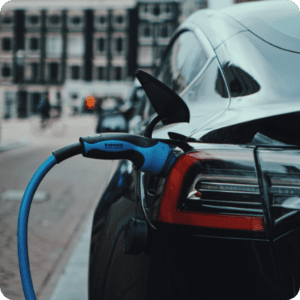
    Plug in charger for electric vehicle


    EV safety benefits from silicone sponge

    Using silicone sponge to optimise EV safety offers a number of benefits, including the following:

    • Excellent thermal stability: -60°C to 230°C
    • Flame resistance to UL94V0
    • Reliable performance
    • Continues to perform under harsh conditions
    • Resistant to thermal shock, oxidation, moisture and chemicals
    • Excellent electrical insulation

    All of the benefits above are integral to EV safety and performance.

    Electric car battery safety

    EV/PHEV manufacturers take safety incredibly seriously and work in line with stringent design regulations, which have been put in place to ensure that electric vehicles are safe to drive and charge.

    Although EV battery technology has developed significantly in the last 5 years, safety risks in relation to fire breakout are still a concern due to the batteries experiencing the event of ‘thermal runaway’ where lithium ion cells experience rapid and uncontrollable increases in heat which can potentially result in a fire.

    This has resulted in many manufacturers looking for new materials and designs to minimise risks and hazards by using materials such as silicone sponge to improve car battery safety.

    ✔ Vibration isolation

    Preventing shock and vibration in electric vehicles is also a major safety challenge for many EV manufacturers.

    Resolving issues with noise, shock and vibration not only paves the way for a smoother and more quieter drive but also makes driving safer for both drivers and passengers alike. Addressing these issues can also help to optimise the longevity of the electric vehicle and its components car.

    Silicone sponge is a great vibration damping material that is ideal for helping to optimise both noise and vibration control in EVs – enhancing safety and performance.

     ✔ Thermal management in electric vehicles

    Thermal management in EVs is a critical factor in battery technology with the risk of thermal runaway being ever present. By reducing or removing excessive heat generated by the battery reduces the risk of overheating and worse, the event of thermal runaway.

    To ensure that the components do not overheat and jeopardise safety, the thermal energy generated in the electric vehicle must be quickly and effectively dissipated away from the core components.

    Due to its heat resistant qualities, wide operating temperature range, and ability to provide thermal stability, silicone sponge can be used to support thermal management in electric vehicles.

    Silicone sponge can withstand extreme temperatures, both high and low, with little change to physical properties when exposed to extreme temperatures making it ideal for EV batteries to help seal, insualte and protect critical .

     ✔ EV charging safety

    Silicone can help ensure the safety of EV chargers, protecting charge points from water, dust and moisture ingress and also ensuring the internal elements such as PCBs deliver reliable performance while minimising risks such as overheating and fire.

    Not only this but, because silicone offers impressive resistance to the weather and other environmental factors, electric vehicle charging points can be located anywhere.

    Silicone is also widely used to insulate EV battery cables, thanks to its insulation and fire-retardant properties. Because silicone can withstand significant temperature variations, the cables can withstand the heat generated by the charger’s high voltage output.

    Electric Vehicle Charging

    How we can help

    Silicone Engineering is a leading provider of high-performing silicone rubber solutions fit for use across a wide range of automotive applications. To find out more about the products we offer please visit the automotive page or please get in touch.

    What to expect at FPRS 2020

    FPRS 2020

    Leaders in rail fire safety will gather once again this month at the annual Fire Protection of Rolling Stock (FPRS) conference and exhibition.

    Hosted in the German capital Berlin on the 25th and 26th Feb, FPRS gathers global train operators and manufacturers along with leading component and material suppliers to explore new and improved ways to ensure rail travel remains one of the safest modes of transport.

    Silicone Engineering will again be exhibiting the V-0 range of silicone sponge, specially formulated to improve fire and smoke safety to international standards such as EN45545-2 and NFPA 130. kSil®V-0 is a closed cell, lightweight silicone sponge that has been specially formulated for mass transit interior applications including: door seals, electronic enclosure seals, HVAC gaskets, vibration dampening, LED gaskets, and gap fillers.

    Marketing Manager, Simon Holmes said “We are extremely excited about this year’s FPRS where we will be promoting our V-0 range. We formulated and developed the range with the aim to provide a high performance silicone sponge for sealing, insulation and protection whilst at the same time ensuring V-0 passes critical fire and smoke safety standards such as EN45545-2, NFPA 130 and Bombardier SMP 800c. FPRS is a great conference that gives us the opportunity to network with industry leaders as well as discussing ways to continually improve fire safety.”

    If you’re planning on attending FPRS 2020, please come and see us!

    REACH Compliance

    REACH Compliance

    June 2018 saw the European Chemical Agency add chemical intermediates D4, D5 and D6 to the REACH candidate list of substances of very high concern (SVHC).

    Since then, questions on how this affects silicone rubber products and its safety in application have been asked.

    Silicone Engineering have been working very closely with our suppliers to obtain as much information as possible to pass to our customers. In addition to this, we have conducted external independent testing on a number of our product ranges to ensure we have exact data to show levels of the three substances (D4, D5, D6) in our silicone products.

    Following product testing, Silicone Engineering can confirm that none of the 197 substances on the current SVHC candidate list are present in reportable levels and are therefore deemed REACH compliant. REACH compliant product ranges include:

    • kSil® Solid Sheeting
    • kSil® Sponge Sheeting
    • kSil® Reinforced Solid Sheeting
    • suraSil™ Solid Extrusions
    • suraSil™ Mouldings
    • expanSil™ Sponge Extrusions
    • neutraSil™ – Antimicrobial
    • metectSil™ – Metal Detectable (Solid & Sponge)
    • GPC cable insulation

    Silicone Engineering can also confirm that all kSil®GP and suraSil™GP solid silicone products remain in complete compliance with the following food regulations –

    • FDA – Food and Drugs Administration 21 CFR 177-2600
    • BFR XV Empfehlung and colour bleed test according to BFR Empfehlung part B 11
    • Directive EC 1935/2004

    Compliance with REACH and food regulations has been achieved firstly through re-investment into new and improved processing equipment over the last decade. Secondly, trusted, quality and innovation focussed raw material suppliers and thirdly, continual improvements to our processes throughout the factory. This has given the business enhanced process controls from start to finish especially during the pre and post cure stages which has resulted in more efficient and effective curing method. Overall, these combined improvements and assurances provide a more stable product with improved physical properties.

    Managing Director, Paul Kinsella said “As a company we are committed to manufacturing and supplying products to the highest industry standards. Product integrity, longevity and performance in application are what original equipment manufacturers (OEMs) and their supply chains strive for in design and build and we are focused on servicing those aims.”

    More information on exact data is available to customers on request.

    Site built by Vertical Leap